Materials That Age Well in Bangladesh: A Practical Palette Guide
A material palette photographed on handover day tells you nothing. The real question is what each surface looks like after five Dhaka summers and monsoons — with dust, humidity swings and hard ultraviolet light working on it every day.
Local stone and brick earn their keep
Exposed brick and locally quarried stone are not aesthetic preferences here; they are climate-appropriate. Both handle humidity without delaminating, age into a patina instead of decay, and can be repaired by any local mason without matching a discontinued imported product.
- Engineered wood flooring fails fastest in ground-adjacent, humid rooms — specify it upstairs, or choose treated solid wood
- Painted external walls should be mineral-based or elastomeric, not basic emulsion
- Dark, glossy laminates show every dust particle — matte, mid-tone finishes stay looking clean
- UPVC and aluminum windows outperform wooden frames in monsoon-exposed facades
- Local teak, properly seasoned, outlasts almost every imported board material
The most sustainable material is the one you will not replace in five years.
Design for maintenance, not just for the photograph
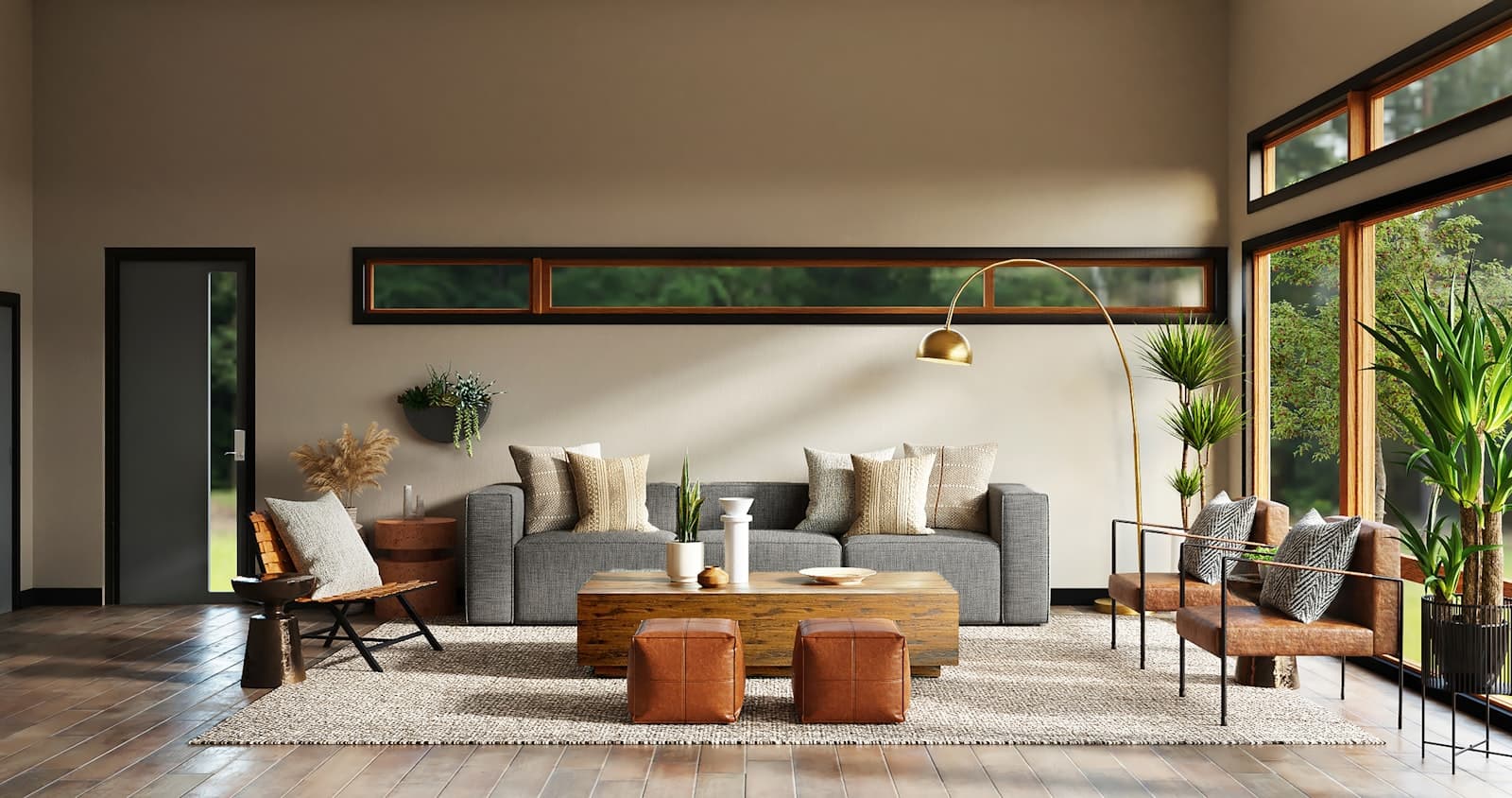
Every interior decision has a maintenance profile. A white glossy kitchen looks extraordinary on day one and demands daily attention; a warm matte laminate in a wood tone hides the life of a real household. Neither is wrong — but deciding consciously, knowing the trade-off, is what separates a designed interior from a decorated one.
Good materials are ones that are honest about time.